





The first two months of a puppy: what it learns from its mother, its siblings and the breeder
Understanding their past is the best way to help them build their future.
A puppy doesn't start learning the day it arrives home
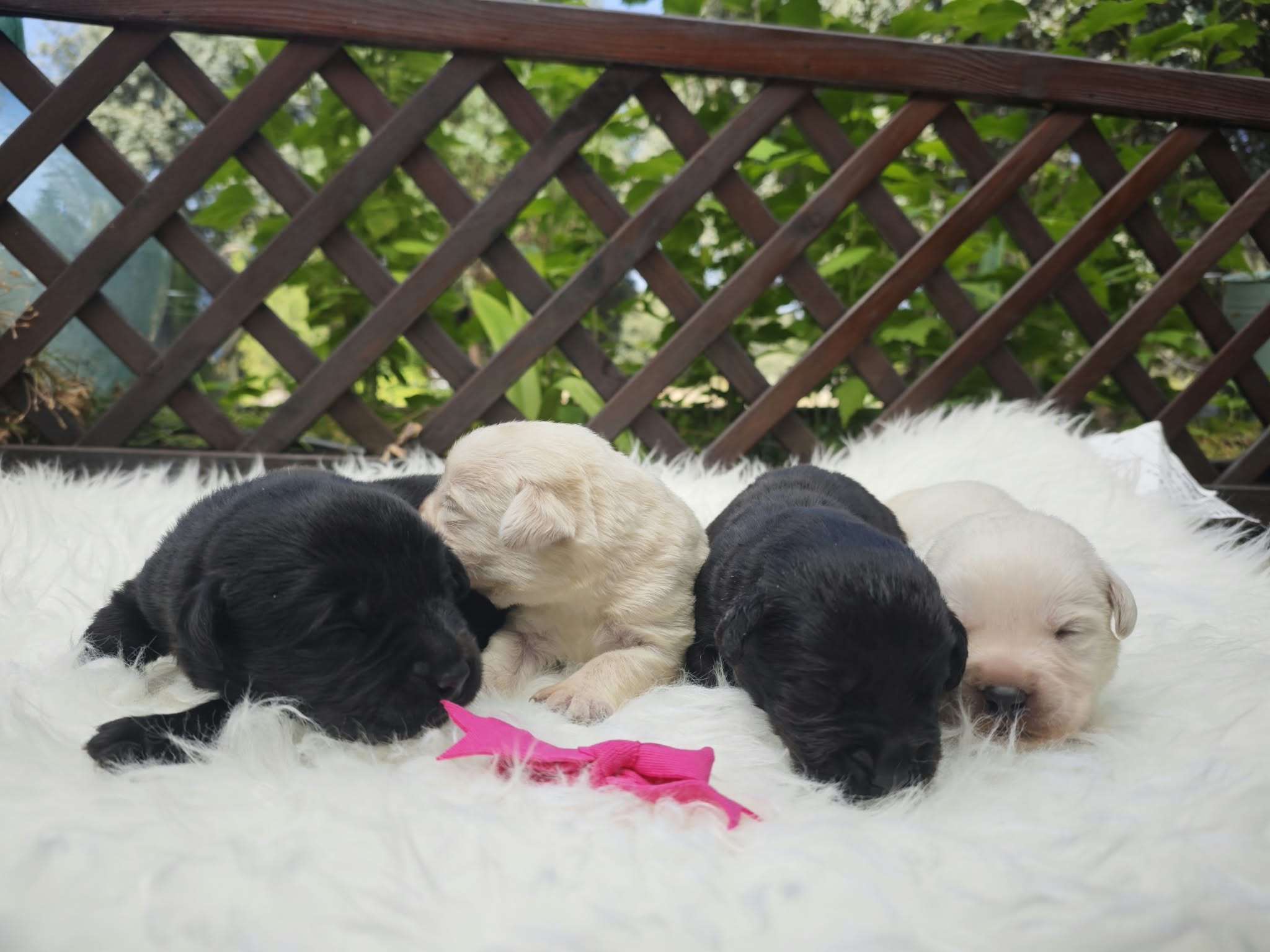
When you pick up a puppy, it has already been learning for eight weeks. It has learned from its mother, its siblings, and the environment in which it has grown up, where the breeder plays a central role. Everything it has experienced in that time travels with it in the carrier the day it goes with you.
This article is not about pointing fingers at anyone. It is about understanding what happens in those first weeks, what a puppy needs to develop properly, and why that period conditions so much the dog it will become as an adult. If you are going to have a Labrador, or if you already have one and want to understand it better, this is the time to start from the beginning.

The sponge brain: the socialization window
A puppy's brain is not a blank page that fills up little by little. It is more like a sponge: it absorbs everything that happens around it at a speed that will not be repeated at any other stage of its life.
Between three and twelve or sixteen weeks of age is what ethologists call the socialization period. During that window, the puppy forms its idea of what is "normal" in the world: people, other dogs, sounds, textures, smells, objects, situations. What it knows in that time and experiences as something safe will tend not to scare it as an adult. What it does not know, or what it associates with something negative, will be much more difficult to incorporate later.
A dog that has grown up in a stimulus-rich environment during its first weeks has more tools to face the world. One that has grown up in a poor environment will have to try harder, and its family will have to work harder, to reach the same point. It is not a condemnation: it is simply the reality of development.
In those first weeks, the puppy is not alone. It has three teachers: its mother, its siblings, and the breeder.

What it learns from its mother
The mother does not only feed. The mother teaches, and she does it in ways that often go unnoticed by those who do not know them.
- To relax and manage frustration. When the mother weans her puppies, she doesn't do it all at once. She begins to withdraw, to growl softly if they insist too much, to set limits. The puppy learns that you can't always have it, that there is a time for everything, and that frustration can be tolerated. That learning is the basis of what we later call "self-control".
- To read canine language. The mother communicates constantly with her puppies: with posture, with her gaze, with small gestures. The puppy learns to interpret those signals from the first day. It is the first language it learns, and it learns it without anyone explicitly teaching it.
- To calm down. Contact with the mother, her warmth, her smell, her breathing, are the puppy's first emotional regulator. When it gets scared, it looks for its mother. When it is tired, it snuggles with her. That pattern of "seeking and finding calm" is the one it will later transfer to its human family.
- To respect others' space. A mother who is resting doesn't always want to play. The puppy learns to distinguish when it can approach and when it can't. It is an early lesson about limits and coexistence.
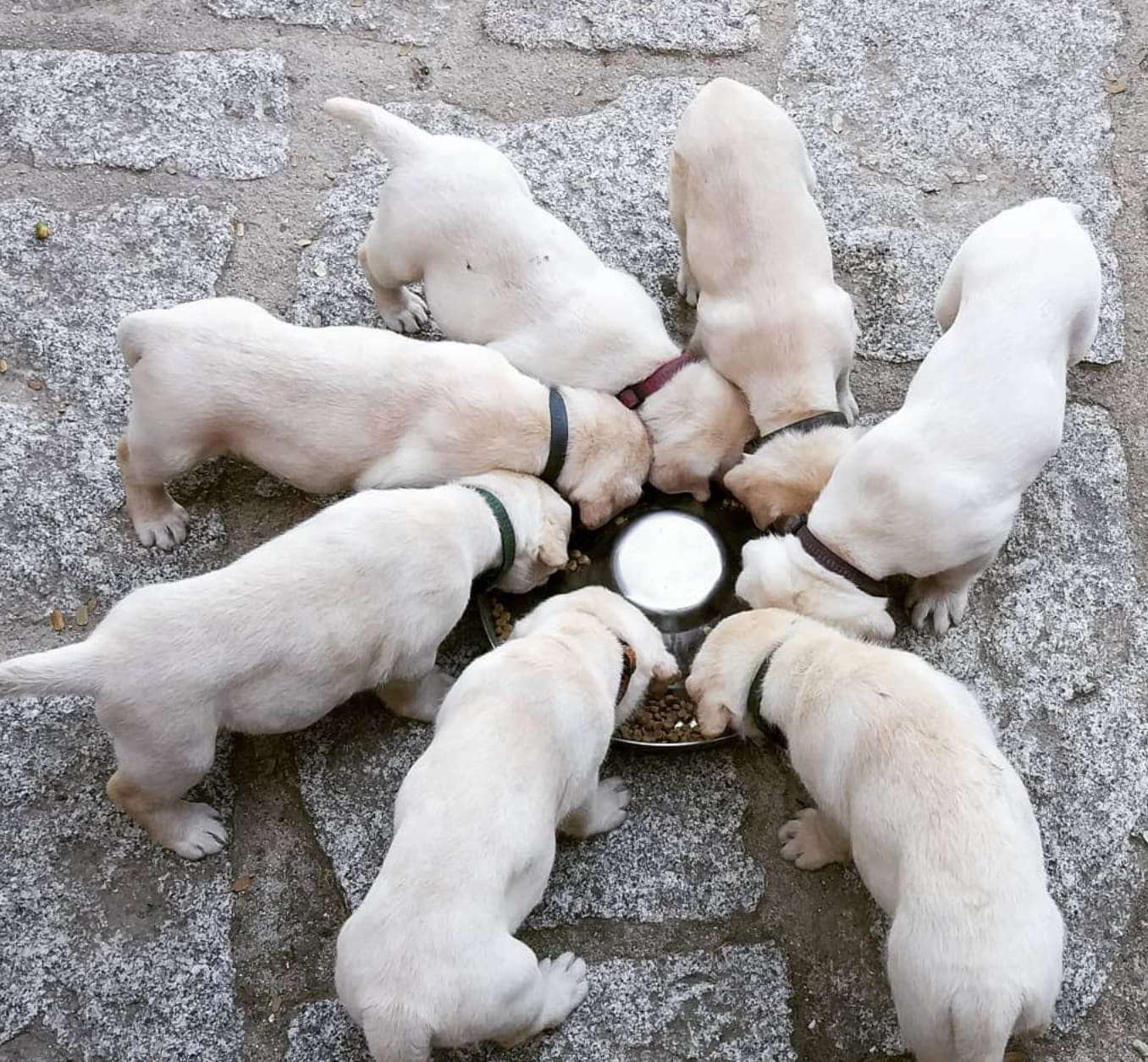
- And it also learns to eat. The transition from milk to solid food is not only nutritional: it is a learning process. The puppy discovers new textures, flavors, and smells, and does so with its mother nearby, which gives it the confidence to try.
What it learns from its siblings
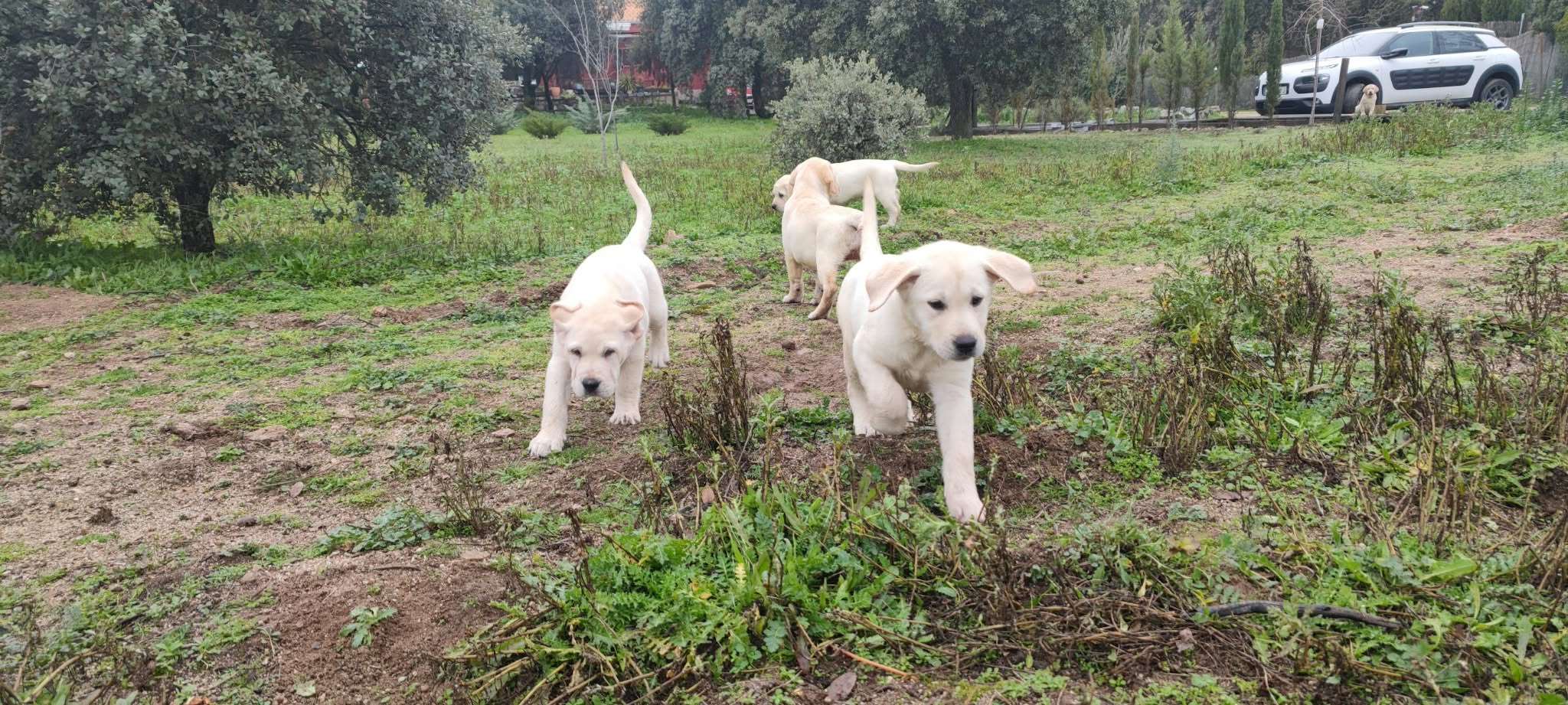
Siblings are the puppy's first social group. And as a social group, they are demanding.
- To measure the strength of its bite. When two puppies play and one bites too hard, the other yelps, moves away, or stops playing. The puppy learns, in real time, that biting hard has consequences. This is one of the most valuable lessons it will take to its new home: bite inhibition. A puppy that has played a lot with its siblings usually has a "finer" mouth than one that hasn't had that opportunity.
- To yield and to win. In play between siblings, there is no fixed winner. Sometimes one gets on top, sometimes the other. Sometimes one retreats and then comes back. That alternation teaches the puppy that play is an exchange, not a competition. It learns to wait its turn, to ask, to stop, to resume.
- To communicate with calming signals. When a sibling gets tired or wants to stop, it emits signals: turns its head, licks, yawns, moves away. The other puppies learn to read those signals and respect them. It is the same language they will later use with other dogs and, to some extent, with people.
- To share and compete without aggression. The food bowl, the toy, the resting place. Siblings teach the puppy that resources exist and that there are ways to access them without conflict. A puppy that has grown up with siblings usually has more social resources to manage coexistence.
- And they also learn to be bored. A puppy surrounded by siblings is not always playing. Sometimes nothing happens. And learning to tolerate boredom is an invaluable skill for adult life.
The breeder: space, health and first weeks
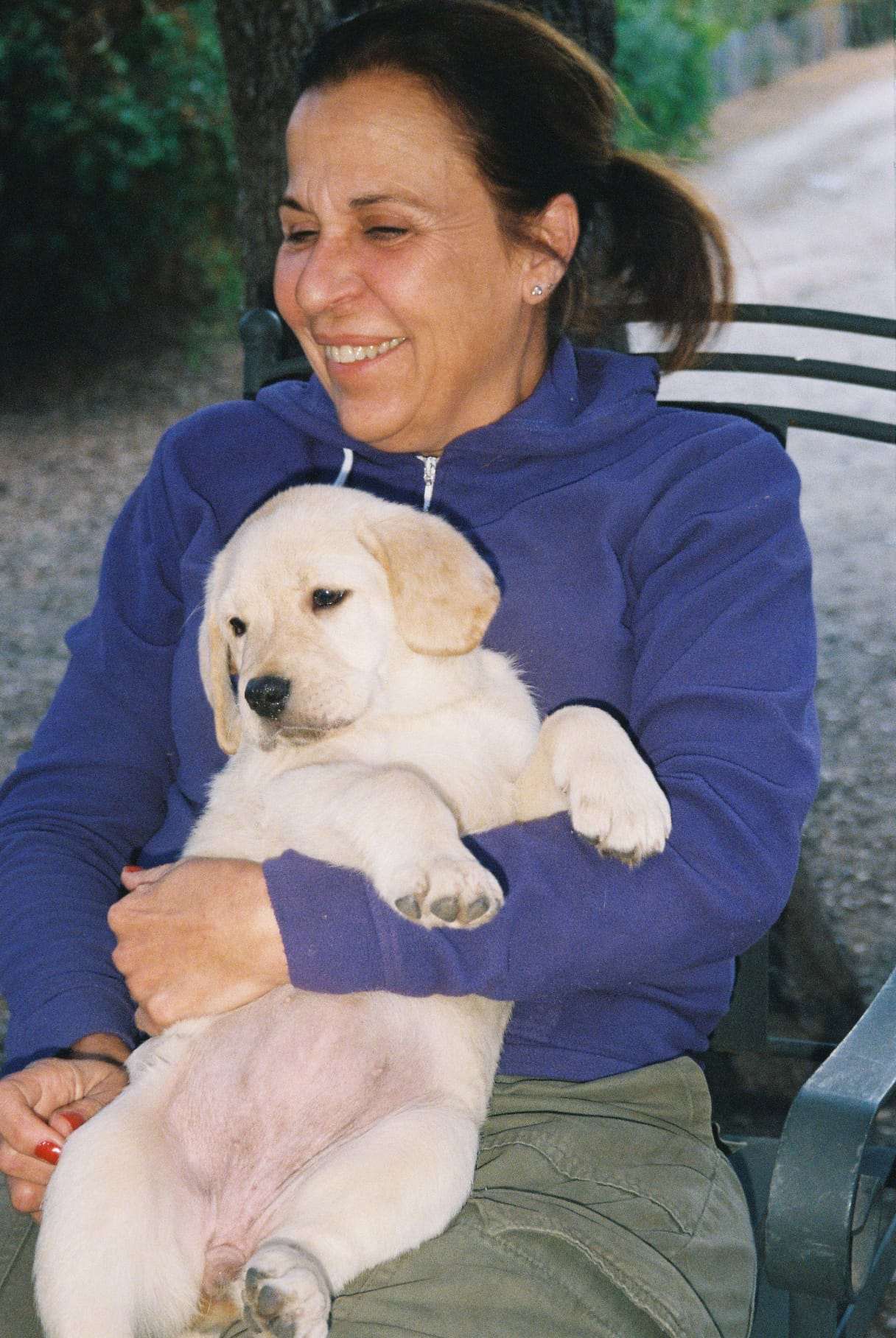
Between the mother and the siblings there is a third element that conditions everything that happens: the breeder. It is the one who organizes the space where the puppies grow, who attends to their health daily, and who decides what experiences they have in those first weeks. Their role does not replace that of the mother or the siblings: it accompanies and frames them.
The space where puppies grow is not a simple enclosure: it is their first world. That is why it should be safe and clean, but also varied. A non-slip floor, a stable temperature, a rest area and a play area, and the possibility of moving without being locked in a box. Puppies need to explore, move, and encounter small difficulties — a step, a different surface, a new object — because that is how they develop coordination and curiosity.
Health is attended to from the first day: internal and external deworming, first vaccines, veterinary check-ups, weight control, and daily observation of each puppy. Health in the first weeks is the basis of everything else: a puppy that does not feel well cannot learn well.
The breeder: weaning, routines and progressive socialization
Weaning is not just a change of food. It is an emotional process. The mother's timing is respected, wet food is offered and then quality dry food, and it is ensured that all puppies eat. Well-paced weaning prevents digestive and behavioral problems.
Puppies learn very early to associate schedules and contexts. Establishing clear routines — meals at the same time, outings to the same space, rest times — helps the puppy arrive at its new home with a basis of predictability. That predictability is what later facilitates potty training, sleep, and adaptation to the new family.
Socialization is dosed. Puppies are exposed, gradually and respectfully, to varied stimuli: different people (men, women, children, people with hats, with canes, with uniforms), everyday sounds (vacuum cleaner, doorbell, telephone, car), textures (grass, cement, fabric, wood), new objects, other balanced adult dogs. It is not about putting the puppy in a crowded park on the first day. It is about adding small positive experiences, not accumulating stimuli without order.
Each puppy in a litter is different. The boldest, the shyest, the one who eats first, the one who falls behind, the one who seeks human contact, the one who prefers its siblings. Knowing these differences makes it possible to guide families on which puppy fits best with each home.
And finally, separation. Eight weeks is a widely accepted minimum, and many litters are delivered between nine and ten to ensure that socialization with the litter is complete. The transition is prepared: the puppy leaves with a blanket with the scent of the litter, with the feeding schedule, with the health calendar, and with clear information about what it has experienced up to that moment.

The invisible luggage it takes to your home
When the puppy arrives at your home, it does not arrive empty. It arrives with:
- An idea of what a human being is (or several ideas: men, women, children, people with deep voices, people with hats...).
- An idea of what another dog is (its mother, its siblings, perhaps some balanced adult).
- A basic repertoire of calming signals and canine communication.
- A certain capacity to tolerate frustration and boredom.
- Some sleep, eating, and resting habits.
- A more or less "fine" mouth, depending on how much it has played with its siblings.
- A greater or lesser curiosity towards the new, depending on how much it has explored.
All of that is the puppy's invisible luggage. And all of that, to a large extent, has been built in eight weeks.

What you can do as a family
Understanding what your puppy has experienced before arriving helps you understand what it will need afterwards. If it has had a good foundation, your job will be to continue and expand. If its foundation has been more limited, your job will be to compensate with patience and a clear plan.
Some ideas for everyday life:
- Don't isolate it. The first weeks at home are an opportunity to continue socializing. Invite different people home, take it to quiet places, introduce it to new sounds and textures, always positively and in doses.
- Respect its timing. A puppy needs to sleep a lot. Sleep is part of learning. Don't overstimulate it.
- Maintain routines. Meals, walks, rest, and play at predictable times. Predictability provides security.
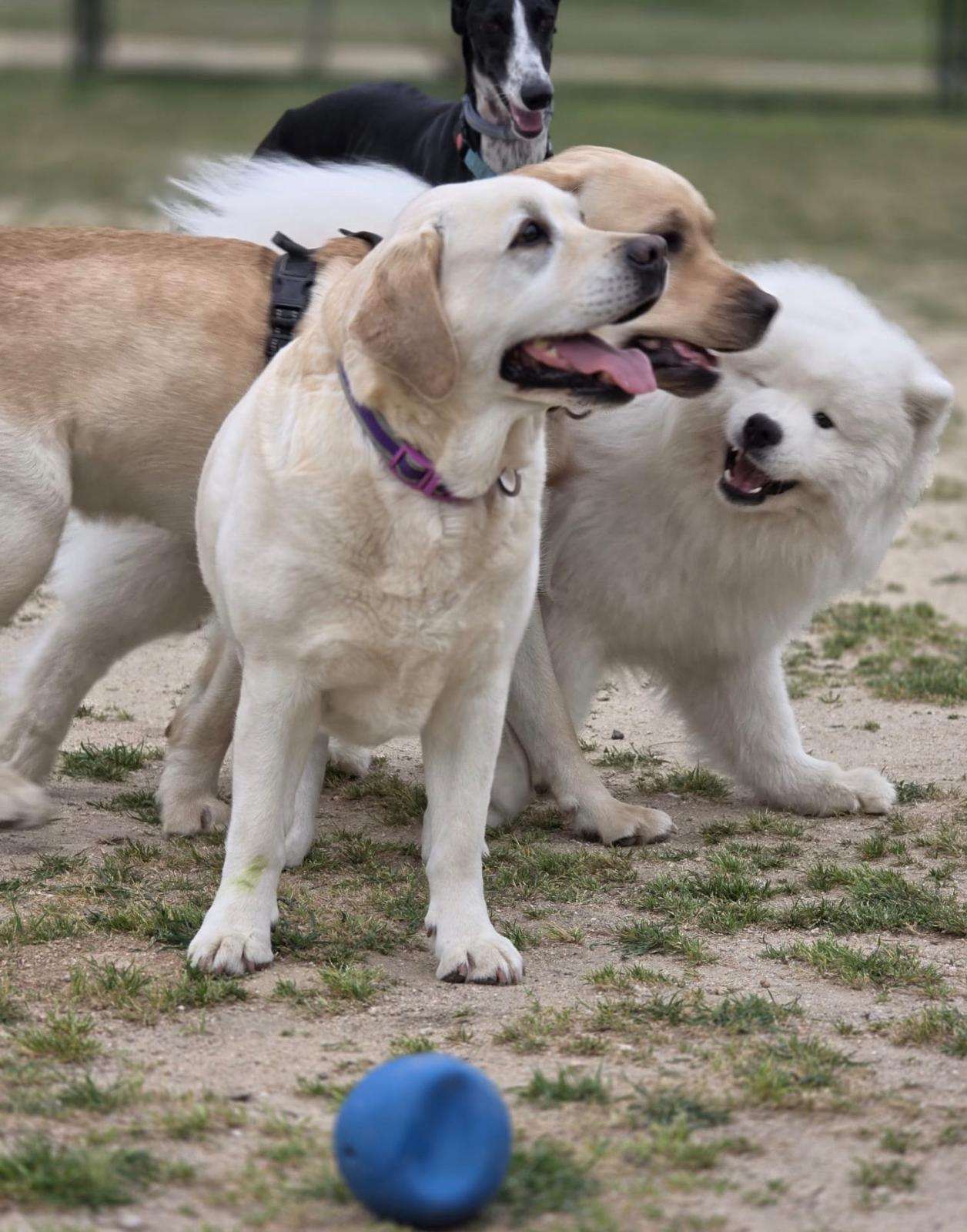
- Play with it. Play is the best learning tool you have. Through play, you teach self-control, turns, bite inhibition, and bonding.
- Observe and know your dog. Every puppy is different. What works for one may not work for another. Learn to read its signals.
Conclusion: the foundation of everything to come
The first two months of a puppy are not a procedure. They are the foundation on which everything else is built. The mother teaches self-control, canine language, and calmness. The siblings teach bite inhibition, turns, and social skills. And the breeder organizes the space, attends to health, paces weaning, establishes routines, and doses socialization during that time.
When you understand what happens in those first weeks, you stop seeing the puppy as a small dog and start seeing it as what it is: a being in full development, with invisible luggage it is already carrying the day you pick it up. And understanding that luggage is the best way to help it become the balanced dog you want it to be.
No registration, no email, just vote…