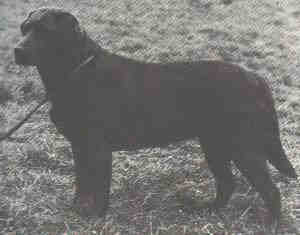






History of the Labrador Retriever
The ancestors of the modern Labrador originated on the island of Newfoundland, now part of the province of Newfoundland and Labrador, Canada. The precursor of the breed was the St. John’s water dog, also known as the “Lesser Newfoundland” or “Water Dog.” This breed emerged through breeding by the early settlers of the island in the 16th century. The ancestors of these dogs are uncertain, but they were likely a mix of English, Irish, French, and Portuguese working breeds brought by fishermen who called at the island.
There were two distinct lines within the St. John’s dogs, which gave rise to two different breeds: the Newfoundland (larger and with a long coat) and the Labrador Retriever (lighter, short-coated, and highly skilled in water).
The fishermen of Newfoundland used these dogs for multiple tasks: they would jump into the water to retrieve full fishing nets with their mouths and tow them to shore. They would also go in the boats and, jumping into the water, carry the floating corks of the nets to the coast. They retrieved anything that fell overboard. Their loyalty, passion for water, and willingness for hard work were invaluable characteristics for the fishermen.
The fishermen preferred short-coated dogs because ice would not accumulate on their waterproof coats. The most common color was black with white markings, and many had a distinctive “tuxedo” or “smoking” pattern: a large white patch on the black chest. The white chest, paws, muzzle, and snout—known as “smoking markings” or “tuxedo”—were characteristic of the St. John’s dog and often appear in mixed Labradors. They occasionally manifest in purebred Labradors as a small white spot on the chest—known as a “medallion”—or slight white patches on the paws or muzzle.
During the 19th century, a good number of St. John’s dogs were taken to the Poole region in England, at that time one of the fishing trade centers for the upper class, where these animals became appreciated as hunting dogs and waterfowl retrievers.
A few kennels in England began breeding them. At the same time, on the island of Newfoundland, a combination of protective sheep-breeding policies—which led to very high taxes on dog owners with the Newfoundland Sheep Protection Act starting in 1885—along with the rabies quarantine in England that prevented the repatriation of dogs, led to the gradual disappearance and consequent extinction of the St. John’s dog in its home country, Canada. The St. John’s dog survived until the 1980s; the last two specimens were photographed already old around 1981.
The first and second Earls of Malmesbury bred dogs for duck hunting on their estate, as did the fifth and sixth Dukes of Buccleuch, along with the youngest son of Lord George, William Montagu-Douglas-Scott. All of them played a decisive role in the development and establishment of the modern Labrador breed in 19th-century England. The dogs Avon—”Buccleuch Avon” and “Ned”—given by Malmesbury to help the Duke of Buccleuch in his breeding program in the 1880s are considered the ancestors of the contemporary Labrador.
The first St. John’s dog is said to have arrived in England around 1820. However, the breed’s reputation spread to England much earlier. The story goes that the Earl of Malmesbury saw a St. John’s dog on a fishing boat and immediately made arrangements with merchants to have some of these dogs exported to England. The ancestors of the first Labradors so impressed the Earl, by their skill and ability to retrieve anything on water and land, that he dedicated his entire kennel to the development and establishment of the breed.
The versatility of these dogs was such that they not only retrieved nets but were also used to tow small boats between the coast and larger vessels. This invaluable help, combined with their gentle temperament, cemented their legend. Two dogs from the 1880s, Buccleuch Avon and Ned, are considered the ancestors of all modern Labradors.