





Working Tests: P.A.N. and Field Trial
Two ways to prove a Labrador is more than good looks: it's a complete working dog
P.A.N. Natural Aptitude Tests
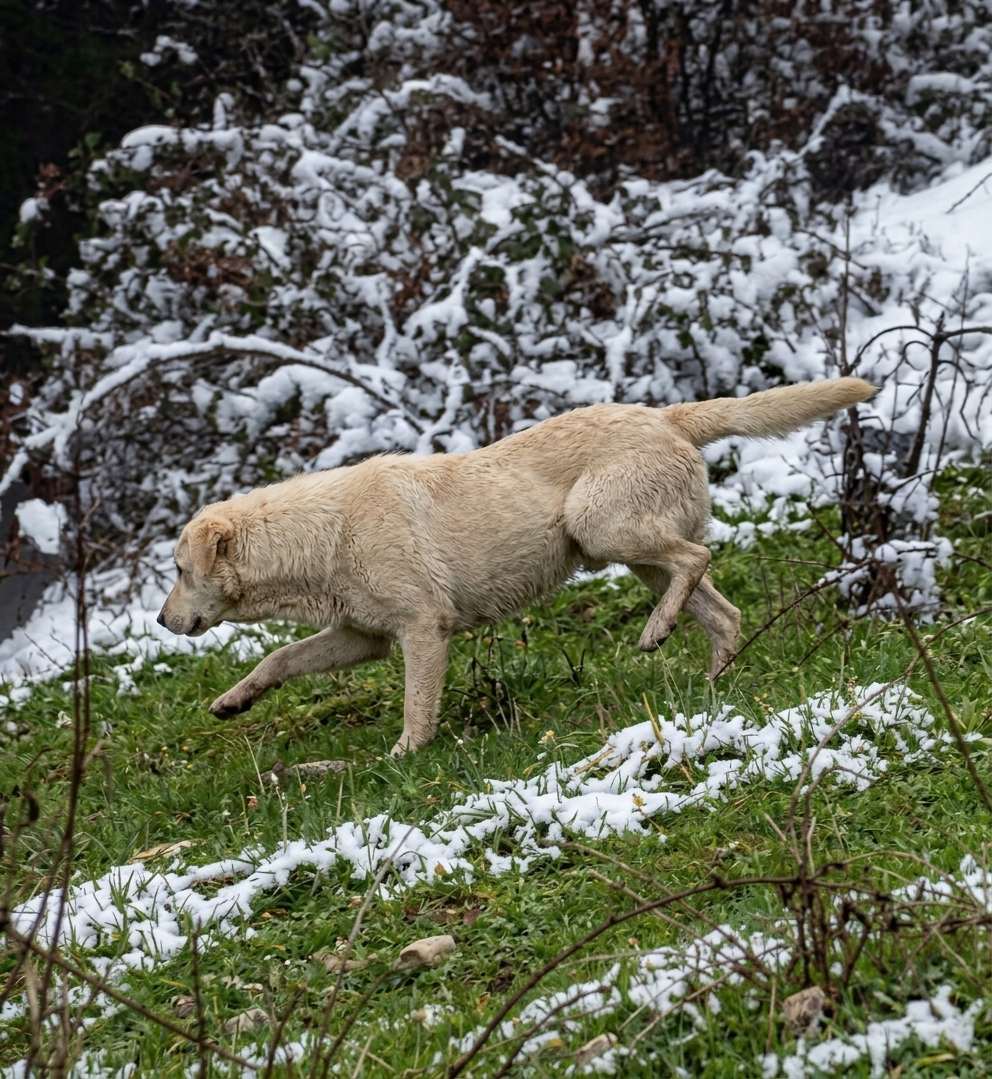
The P.A.N. (Natural Aptitude Tests) is, in plain terms, the first serious exam a Labrador faces if it aims to be more than just a companion dog. It doesn't measure how well trained it is or how elegantly it moves: it measures what it comes with from the factory. Instinct, nose, memory, sight and retrieving ability. It's an introductory test, designed for young dogs, and its purpose is to check that the dog meets the minimum qualities every hunting dog should have, and to verify that those qualities are passed on genetically.
Dogs between 7 and 24 months old can take part, registered with the LOE, the RRC or any pedigree book recognised by the FCI. The test takes place on terrain where game can camouflage itself and vegetation allows the dog to move freely: meadows, calm ground, moorland, light undergrowth or short alfalfa. Difficult terrain is avoided at all costs, because what they want to see is instinct, not physical endurance.
The test has four parts. The first is the **socialisation test**: before anything else, the judge checks that the dog has a balanced temperament, shows no signs of aggression towards other people or other dogs and can be handled without issue. In a breed with a gentle nature like the Labrador, this is essential, because a working dog must above all be a safe, sociable dog. The second is the introduction to game: the dog is placed upwind of a live bird (partridge or pheasant) hidden about 10 metres away, and the judges check that it locates it with its nose and shows no fear or rejection. The third is the water retrieve: a dummy or fresh bird is thrown into a backwater, lake or calm pond where the dog can't touch the bottom, a shot is fired while the bird is in the air and the dog must retrieve it and bring it out of the water. The fourth is the land retrieve: a freshly killed bird is thrown about 20 metres away, a shot is fired again and the dog must bring it back to the handler.
To pass, the dog must be declared APTO in all the general qualifications. And that APTO isn't just a stamp: it's an essential requirement to be able to reach the title of Spanish Beauty Champion. In other words, in this breed it's not enough to be a handsome, well-proportioned dog; to reach the top in conformation, you also have to prove you have instinct, working ability and a stable temperament. The P.A.N. is, in that sense, the gateway to the elite.
Retriever Field Trial
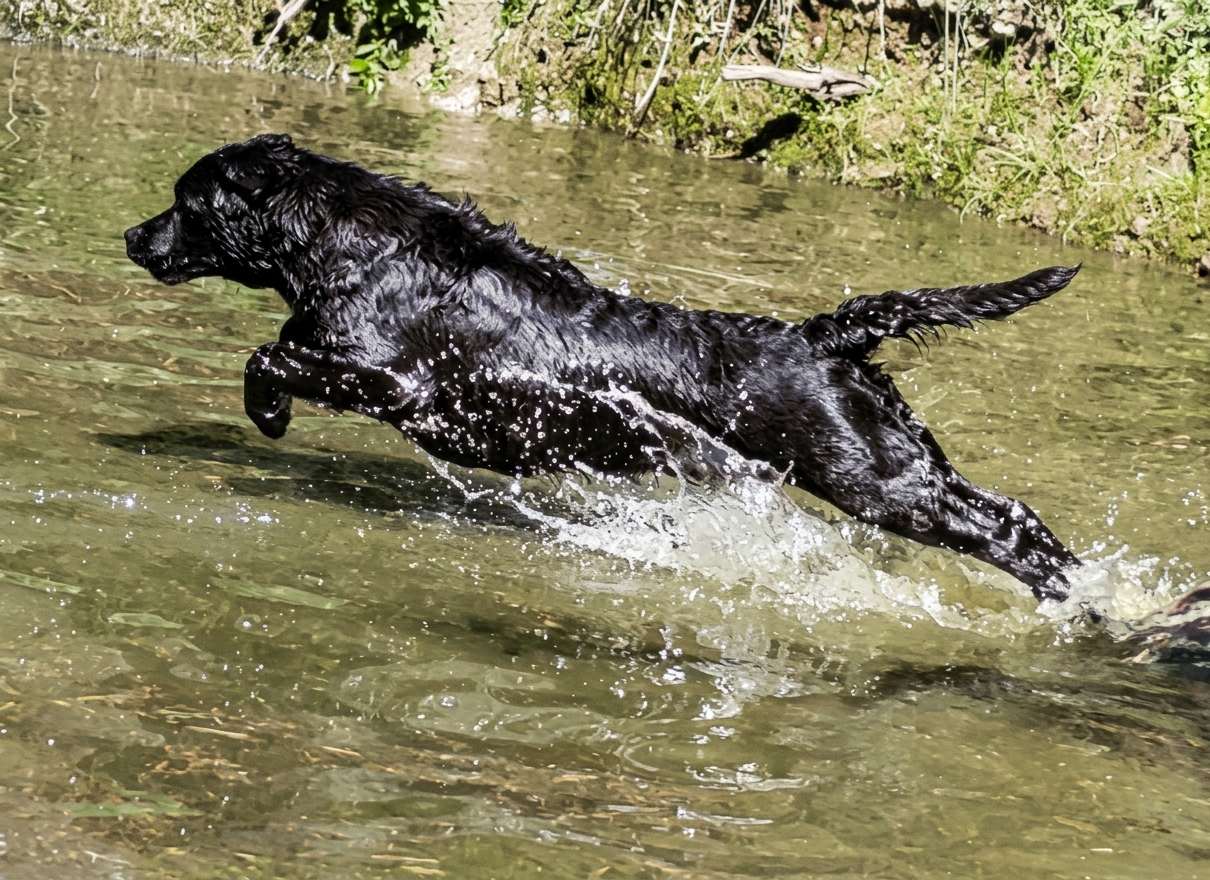
If the P.A.N. is the entrance exam, the Field Trial is the university degree. Here it's no longer about whether the dog has instinct, but about how far that instinct can go when combined with top-level training. A Labrador's love of feather can range from wild passion to moderate interest or even complete disinterest, and that depends a lot on its pedigree and on the handler's skill at motivating it. But almost all Labradors enjoy working in the field for their owner or handler.
A Field Trial tests retrieves on command of downed game. It demands the highest level of training, and it's not just the dog's qualities being assessed: the handler's are too. A Labrador dedicated to this world is a highly disciplined dog that enjoys working and retrieves with a characteristic harmony of movement. It must have a willingness to please, a great passion for hunting, a strong retrieving instinct and notable intelligence. It retrieves quickly and efficiently, knows commands that let it follow directions towards the game, runs straight lines, stops on the whistle and reads the handler's body positions to know whether to go back, turn right or left, or run a diagonal. It must also work well in water, without hesitation and with the determination to enter and retrieve cleanly and swiftly.
There are two main formats. The English one is run off-lead and over long distances, up to 300 metres, either from a «fixed position» or in a «walk-up shoot», where pointing dogs and guns work the ground, flush and down the game, which the retrievers then pick up when the judge signals. Dogs must respect walking at heel and waiting their turn, and retrieve distances range from 80 metres to almost 300, with perfect «marking» and obedience to the handler if direction is needed. The French one is run on-lead and over short distances, similar to a driven shoot: partridge, duck, pheasant or hare are shot, and the dog must wait in position until the judge indicates it's its turn. It must show absolute calm, with no nervousness. Whining, shifting or dropping the game, being out of control or marking territory are eliminating behaviours.